
Emmet County Criminal History Checks
No single database contains every Emmet County criminal record. Start with the 90th District Court for misdemeanors, traffic matters, and the first stages of a felony. Move to the 57th Circuit Court when a felony has been bound over for trial or disposition. Current county custody calls for a jail inquiry or Michigan VINE, while an incident narrative stays with the police agency that wrote it. ICHAT supplies public statewide history, and OTIS applies only after Michigan Department of Corrections custody or supervision.
The official Emmet County gateway leads to the local departments that hold source records. Its county directory helps separate court, clerk, prosecutor, FOIA, and sheriff functions.
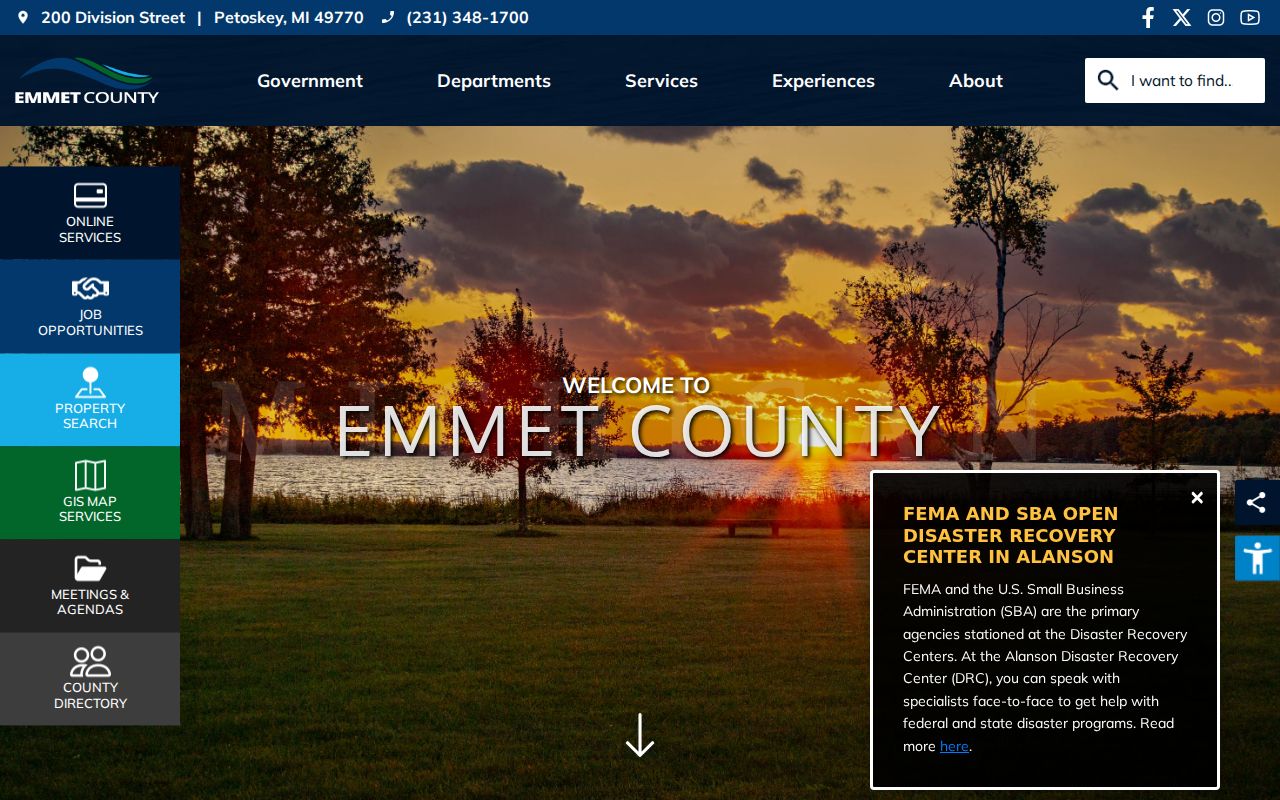
The county gateway is the practical starting point when a name search needs a clerk, report counter, or phone check rather than another database.
- Search D90 MiCOURT for a misdemeanor or a new felony filing, using a full name or known case number.
- Search C57 MiCOURT for a felony that moved beyond the district phase.
- Compare court, filing date, case number, and charge entries before treating two similar names as one person.
- Call the proper court for a current hearing, warrant notation, or unclear status, then ask its clerk for copies.
- Check jail or VINE for present custody, ICHAT for public statewide history, and the creating police agency for the report.
Emmet County MiCOURT Search
Emmet County uses two direct MiCOURT routes because felony work can cross court lines. D90 handles ordinary misdemeanors and the arraignment, probable-cause conference, and preliminary examination in a felony. C57 takes the case after bindover or waiver. A searcher should keep the district case number and filing date when looking for the circuit file. MiCOURT is free and does not require an account, but its result is an index rather than a certified court record.
The Emmet County Clerk record-custody page explains the clerk’s role in maintaining Circuit Court records and the court seal.
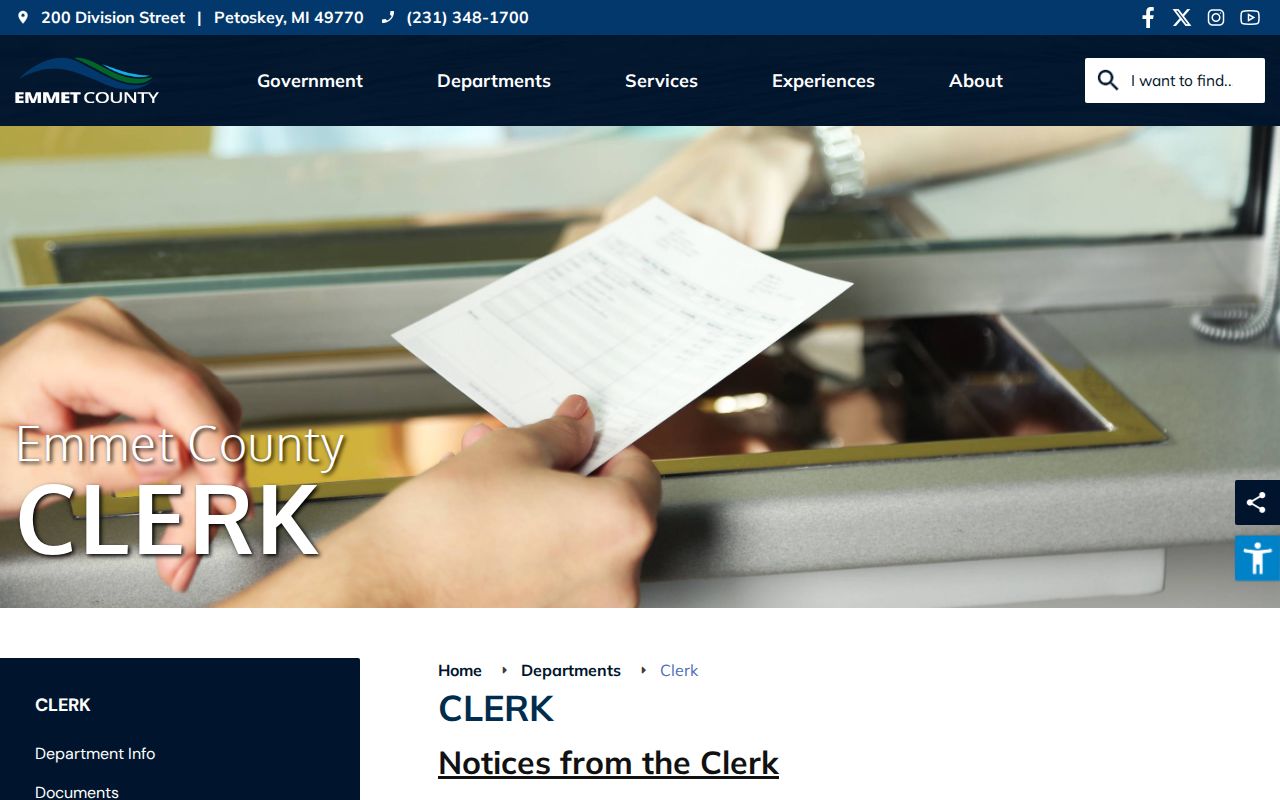
That custody role matters when a docket entry must be backed by a pleading, judgment, or certified copy.
| MiCOURT control | How to use it | Limit |
|---|---|---|
| Court | Choose D90 or C57 | The same felony may require both |
| First and last name | Use both; prefix matching is supported | Confirm identity with case details |
| Case number | Use the Michigan year-number-type format | A district and circuit file differ |
| Category and status | Narrow criminal results and review open or disposed status | Nonpublic and older matters may be absent |
Some courts apply a seven-year criminal-sentence display filter. Request an older file at the clerk counter if a known case no longer appears online.
Official Background Checks in Michigan
The Michigan State Police Criminal Justice Information Center maintains the state repository. ICHAT is its public, name-based product. A search costs $10 and uses first name, last name, date of birth, sex, and race. An alias or maiden name can improve matching. The result excludes warrants, federal and tribal matters, traffic and juvenile records, suppressed records, other-state records, and some local misdemeanors. That scope makes ICHAT useful, but not complete.
The MSP criminal-history overview distinguishes public repository checks from personal fingerprint review and other official products.
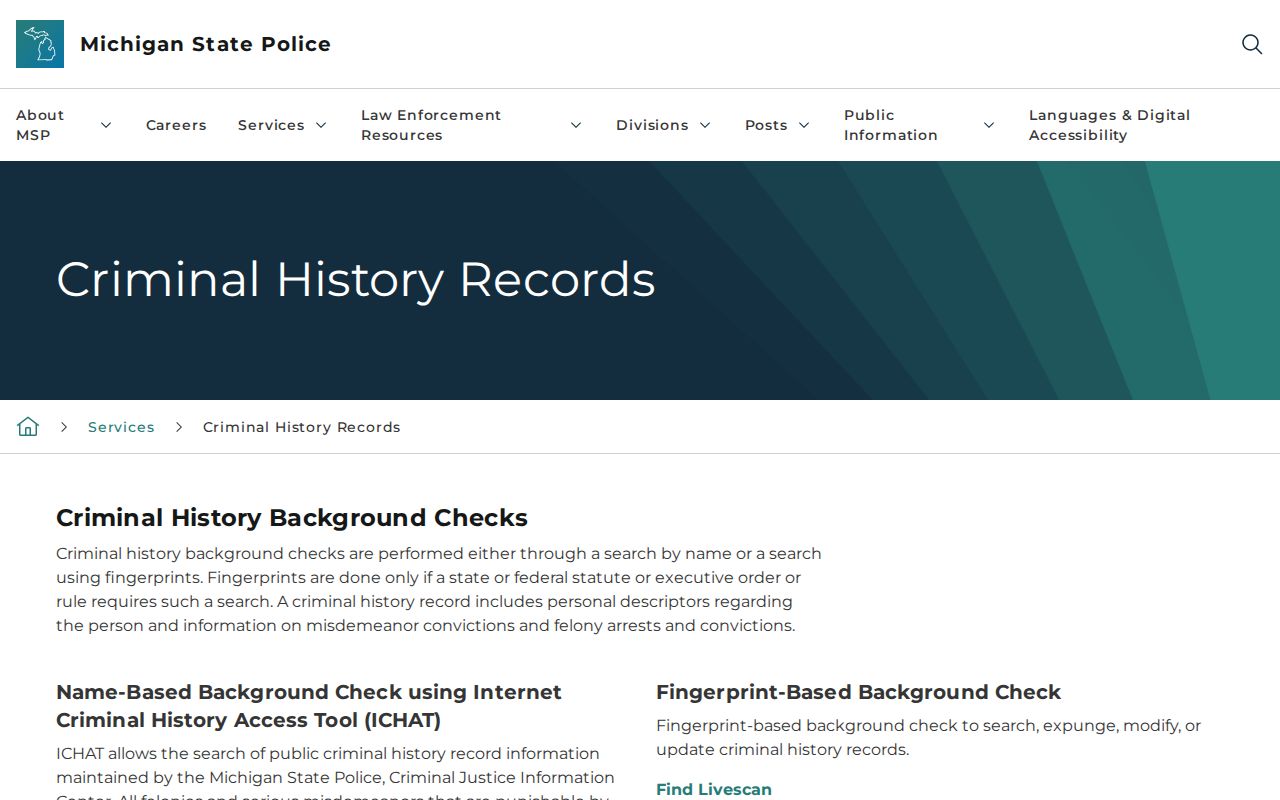
The state explanation shows why a court docket, local police report, and repository response may each contain different facts.
For a personal complete Michigan record review, the person may have fingerprints taken and mail them to MSP CJIC with a $30 payment and contact details. MSP sends the result only to the fingerprinted person. One certified or notarized original is included, extra originals cost $1 each, and the stated processing range is three to five weeks. Statute-authorized Live Scan checks follow the requesting agency’s RI-030 instructions. No current official source confirmed an approved Live Scan site inside Emmet County, so verify the approved location before travel.
Emmet County Records Hub
The Emmet County Building at 200 Division Street in Petoskey brings several record offices under one roof. The County Clerk is in Suite 130, Circuit Court is in Suite 100, District Court is in Suite G12, the Prosecuting Attorney is in Suite G42, and Civil Counsel’s FOIA Office is in Suite G70. General county hours are 8 a.m. to 5 p.m. on weekdays. Those offices share an address, yet they do not share custody of every criminal record.
The county building directory identifies the public offices and hours at the main Petoskey records hub.
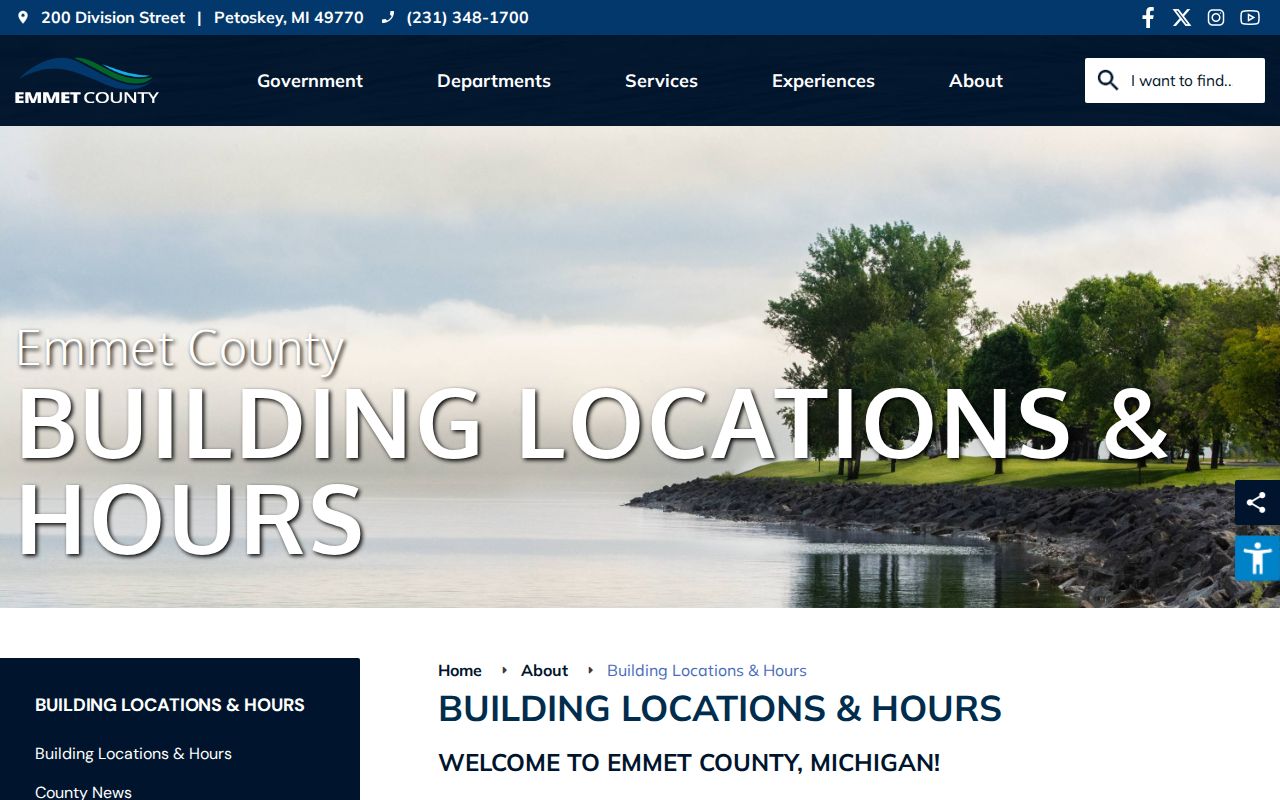
The directory helps route a visitor to the clerk for a case file or Civil Counsel for a county FOIA request.
County Clerk
200 Division St., Suite 130
Petoskey, MI 49770
231-348-1744
90th District Court
200 Division St., Suite G12
Petoskey, MI 49770
231-348-1750
57th Circuit Court
200 Division St., Suite 100
Petoskey, MI 49770
231-348-1711
County FOIA Office
200 Division St., Suite G70
Petoskey, MI 49770
231-348-0678
Kinds of Criminal Records
Each Emmet County record reflects one stage of the justice process. An officer’s report describes the alleged event. Jail staff document a custody episode. The prosecutor files a complaint and, after a felony bindover, an information. Courts record hearings and outcomes. MSP then joins qualifying fingerprint-supported arrests with reported charges and dispositions. These products should be compared, not treated as copies.
- Incident and arrest reports: The creating police agency holds the narrative, complaint number, alleged offenses, and investigative material.
- Booking records: The Emmet County jail may hold intake time, charges, bond, fingerprints, housing, and release facts.
- Court files: D90 and C57 hold complaints, register-of-actions entries, pleas, motions, dispositions, sentences, and financial entries.
- Repository history: MSP CJIC combines qualifying Michigan reporting, while public ICHAT exposes only an eligible subset.
- Supervision and registry records: District probation, MDOC, OTIS, and PSOR each answer a narrower status question.
A booking charge may change before filing. A filed count can later be amended or dismissed. The final disposition belongs to the court record.
Emmet County Jail Records Gap
Emmet County does not publish a searchable inmate roster or daily booking log. For present custody, call the 103-bed Correctional Facility at 231-347-2032 or use Michigan VINE. VINE can provide confidential notice of release, transfer, advanced or work release, or death. A releasable booking record can also be requested through FOIA. OTIS is not a substitute because it covers current or recent MDOC jurisdiction, not county jail intake.
The official MDOC OTIS search is the state custody and supervision layer for qualifying MDOC records.
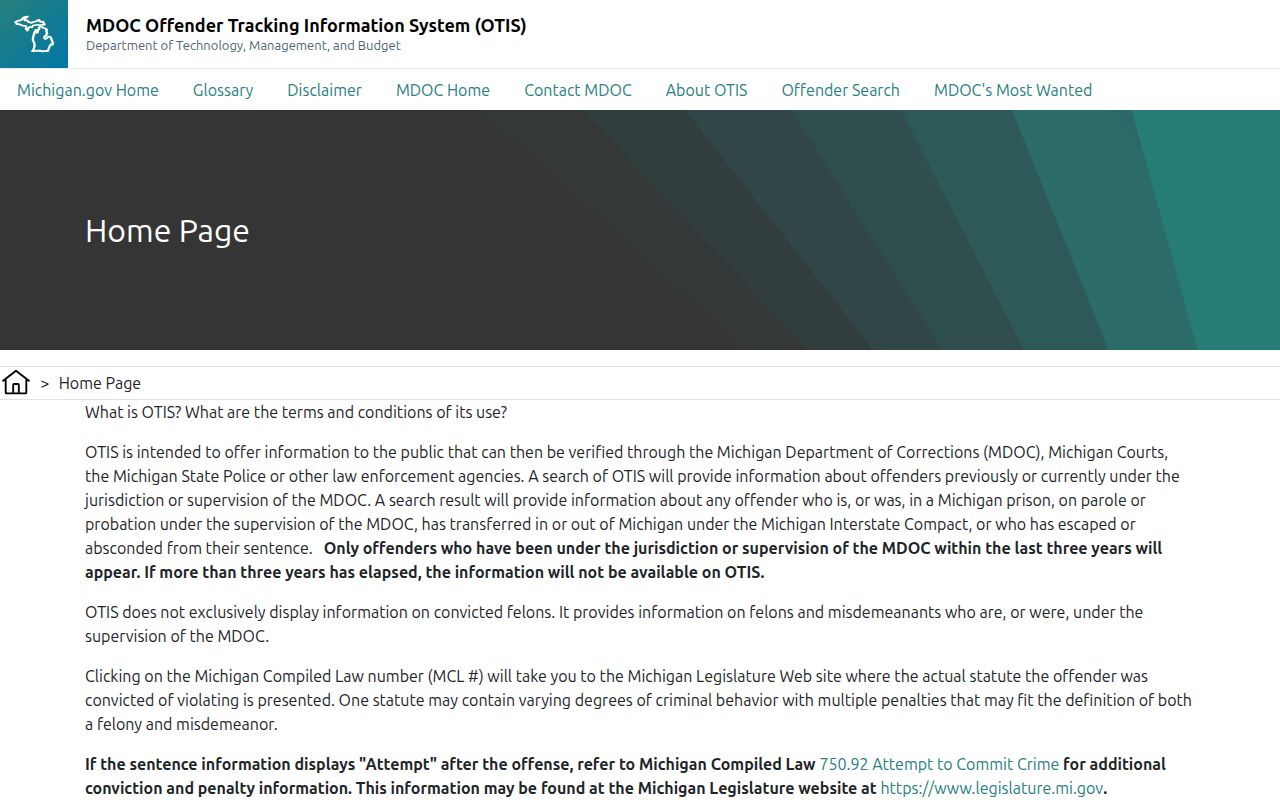
Its narrow scope explains why a recent Bay Street booking may not appear even when county custody is current.
The Correctional Facility operates continuously at 450 Bay Street, while its published lobby hours are 8 a.m. to 4 p.m. Typical internal fields can include a booking ID, intake time, arresting agency, incoming charges, fingerprints, bond, court, housing, and release status. Availability is subject to redaction, and no public profile displays the complete field set.
Emmet County Criminal Records: What They Contain
A Michigan criminal-history record can include a name, birth date, aliases, prior names, physical descriptors, identifying marks, numbers, and reported misdemeanor or felony events. Public views do not expose every stored field. MiCOURT focuses on a case: court code, filing date, counts, statutes, bond events, hearings, disposition, sentence, and costs. A jail file instead focuses on one custody event.
| Name and identifiers | Legal name, aliases, birth date, descriptors, and agency numbers when public. |
|---|---|
| Arrest and booking data | Agency, complaint number, intake time, alleged charges, bond, court, and custody status. |
| Charges and statutes | Each filed count, its legal cite, and its felony or misdemeanor level. |
| Disposition | Pending, dismissed, acquitted, deferred, convicted, or another recorded outcome. |
| Sentence | Jail or prison, probation, fines, costs, restitution, and related dates when entered. |
| Supervision status | District probation or limited MDOC custody, parole, and field-office information. |
Read each count on its own. One Emmet County case can contain several allegations with different outcomes, and a single label can hide that distinction.
Emmet County Record Channels Compared
A strong record check follows the event through the offices that touched it. The police report comes first. If a person is lodged, the jail creates a booking file. D90 records arraignment and other early steps. A bound-over felony moves to C57. Qualifying fingerprints and later dispositions flow to MSP, and a state sentence can add OTIS data. Delays or name mismatches can leave temporary gaps.
Emmet County criminal records flow in this order: Police report → Jail booking → D90 case → C57 felony case → MSP repository → MDOC supervision.
- Bindover
- The transfer of a felony from District Court to Circuit Court after the preliminary stage.
- Disposition
- The recorded outcome of a charge, such as dismissal, acquittal, deferral, or conviction.
- Repository history
- The MSP aggregation of qualifying reported events, not the police report or full court file.
- Set aside
- Michigan’s remedy that removes an eligible conviction from ordinary public view while a limited nonpublic record remains.
Michigan Public Access Laws
Public access depends on the custodian and the kind of record. Michigan FOIA provides a request process for executive and local public bodies, including county-held police material, subject to exemptions. Court inspection follows Michigan Court Rule 8.119. MSP repository dissemination, set-asides, and sex-offender information have separate statutes. A public right to ask does not make juvenile, victim-identifying, sealed, or active-investigation material open.
Key Michigan authorities:
MCL 15.231-15.246 provides the Michigan FOIA request process and exemptions.
MCL 28.241-28.248 assigns repository collection and authorized dissemination to MSP.
Michigan Court Rule 8.119 makes court records inspectable unless they are confidential, sealed, or nonpublic.
MCL 780.621 et seq. governs application and automatic set-asides.
MCL 28.721 et seq. controls registry reporting, publication, duration, and misuse.
Ask the agency that created a police report, the clerk that holds the case, or MSP for its own repository product. One request cannot force a different custodian to produce a record it does not hold.
Emmet County FOIA Report Route
Sheriff crash reports and other police reports follow different routes. A crash report can be requested at the Richard L. Zink Law Enforcement Center for $2 with the complaint number or Michigan identification. Reports may take seven to ten days to complete. A mailed request needs the Accident Request Form, payment, and a stamped return envelope. Fax is not accepted for that crash form.
The Emmet County FOIA Office page provides the county request channel for non-crash police reports and other county records.
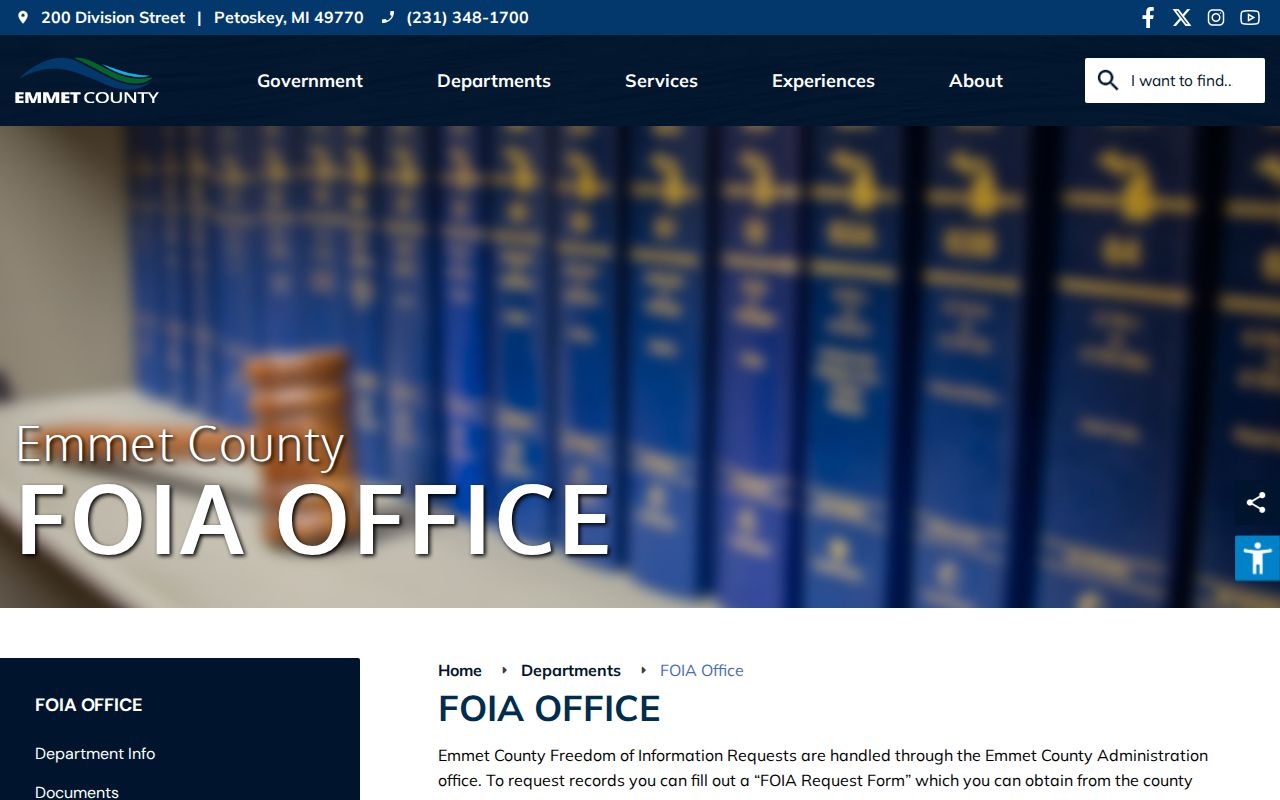
The FOIA channel is also the fallback when a routine report copy is not available at a counter.
| Request | Known cost | Useful details |
|---|---|---|
| Sheriff crash report | $2 | Complaint number or Michigan identification |
| ICHAT name search | $10 | Name, birth date, sex, race, and optional alias |
| Personal MSP fingerprint review | $30 | Fingerprint card, cover letter, and return contacts |
| Set-aside MSP processing | $50 | Filed MC 227 process and required service |
| General county FOIA | Varies | Labor, redaction, copies, media, and delivery can affect cost |
FOIA ordinarily calls for a response within five business days and permits one ten-business-day extension. That clock governs the response, not completion of an unfinished police report.
Restricted, Sealed & Expunged Records
Juvenile cases do not appear in public MiCOURT, and ICHAT excludes juvenile history. Set-aside and suppressed convictions leave ordinary public display, though MSP keeps a limited nonpublic record under Michigan law. Warrants are absent from ICHAT. Courts and agencies also protect victim details, personal identifiers, sealed material, and exempt investigative facts.
Michigan Clean Slate combines application-based and automatic set-asides. An eligible person may file MC 227 in each convicting court, obtain certified conviction records and fingerprints, serve the prosecutor, Attorney General, and MSP, and send MSP the $50 processing fee. Waiting periods vary by record: seven years for more than one felony, five for one felony or serious misdemeanors, and three for other misdemeanors.
The Michigan Courts Clean Slate guidance explains automatic and application-based relief.
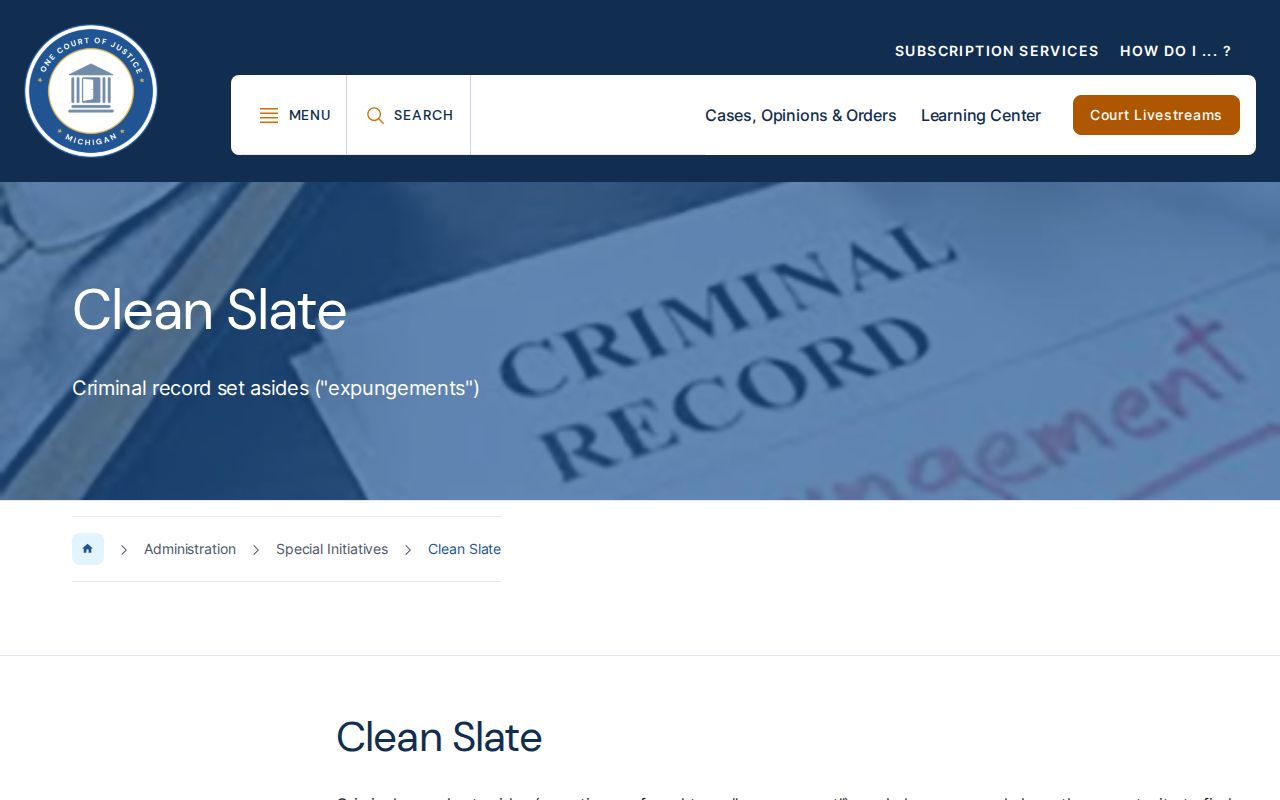
The state guidance helps distinguish relief that requires a filing from eligible records processed through the automatic system.
Automatic Clean Slate began in 2023. It can cover up to two eligible felonies and four eligible misdemeanors punishable by 93 days or more, while eligible misdemeanors punishable by 92 days or less have no numerical limit. Data can take time to reach each public view, so confirm relief through ICHAT, personal fingerprint review, and the Emmet County convicting court.
Emmet County Warrant Records
Emmet County has no official public active-warrant database. Search both D90 and C57 MiCOURT for public warrant events, then call the relevant court to verify a time-sensitive entry. Sheriff enforcement at 231-439-8900 can direct a lawful inquiry, and county FOIA may reach releasable records. An absent ICHAT result proves nothing about warrants because MSP expressly excludes them from that product.
A bench warrant is often issued after failure to appear or noncompliance. An arrest warrant authorizes custody, while a search warrant authorizes a search. Unexecuted search-warrant documents, juvenile warrants, and sealed matters may not be public. Do not act on a portal notation alone. The issuing court or counsel can provide current instructions and bond information.
Emmet’s 57th Circuit Recovery Court and 90th District Sobriety Court also create records tied to treatment, compliance, and supervision. Their presence in the same county building does not make protected program details public.
City-by-City Criminal Records in Emmet County
Emmet County has only two incorporated cities: Petoskey and Harbor Springs. Each city police agency keeps its own incident material and uses a city FOIA route. Neither city has a municipal court. Criminal cases go to the 90th District Court, and custodial arrests go to the Bay Street jail. City records therefore add the police-side detail while the county court supplies the prosecution file.
Petoskey Record Check
Population 5,877 · Department of Public Safety records and city FOIA; cases use D90.
Harbor Springs Record Check
Population 1,274 · Harbor Springs Police records and city FOIA; cases use D90.
Petoskey’s combined public-safety department also handles fire and EMS work, while Harbor Springs has a small police department with marine and foot-patrol records. Those local differences affect which office first holds an incident file.
Emmet County Criminal Record Context
Official Census data place Emmet County’s 2025 population estimate at 33,775 across 467.54 square miles. Petoskey is the county seat. Waterfront recreation, US-31, M-119, the Straits corridor, marine patrol, snowmobile activity, and conservation work bring several agencies into the record chain. Little Traverse Bay Bands Tribal Police are also a working local jurisdiction, so a tribal police report should not be assumed to sit in a county sheriff file.
The official Emmet County Census profile supplies the county population and geography behind that dispersed records landscape.
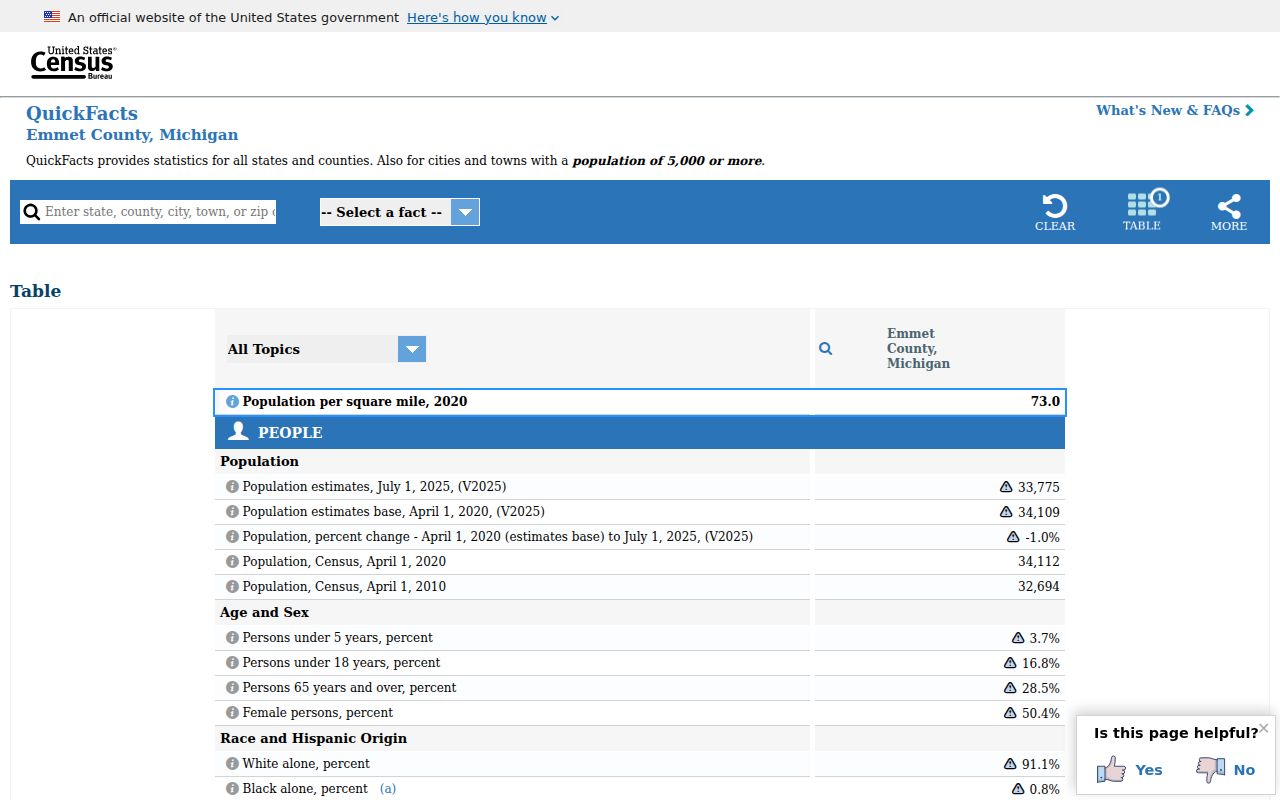
The county’s size and shoreline help explain why police, tribal, marine, court, dispatch, and state channels may all matter to one inquiry.
CCE Central Dispatch serves Emmet, Charlevoix, and Cheboygan agencies, and regional instructions use 911 for both emergency and nonemergency officer dispatch. CAD and dispatch records remain separate from a police report and may require their own request. Keeping the complaint number, case number, date, and source office with each copy is the simplest way to preserve the chain from incident to outcome.